A virtual IT manager is an external IT lead who takes ownership of your technology on a part-time or retained basis, instead of a salaried employee sitting in your office. You get the planning, supplier oversight and security direction of an IT manager, scaled to what a small or medium-sized business actually needs. This guide explains what the role covers, how it differs from routine support, what affects the cost and what to check before you sign.
What is a virtual IT manager?
The term is used loosely, so it helps to pin it down. In the wider industry, a virtual CIO is a contractor or company that serves as an organisation’s CIO, and a fractional version provides that role part-time (TechTarget). “Fractional IT manager” and “virtual IT manager” describe the same idea: a share of an experienced person’s time, rather than a whole post.
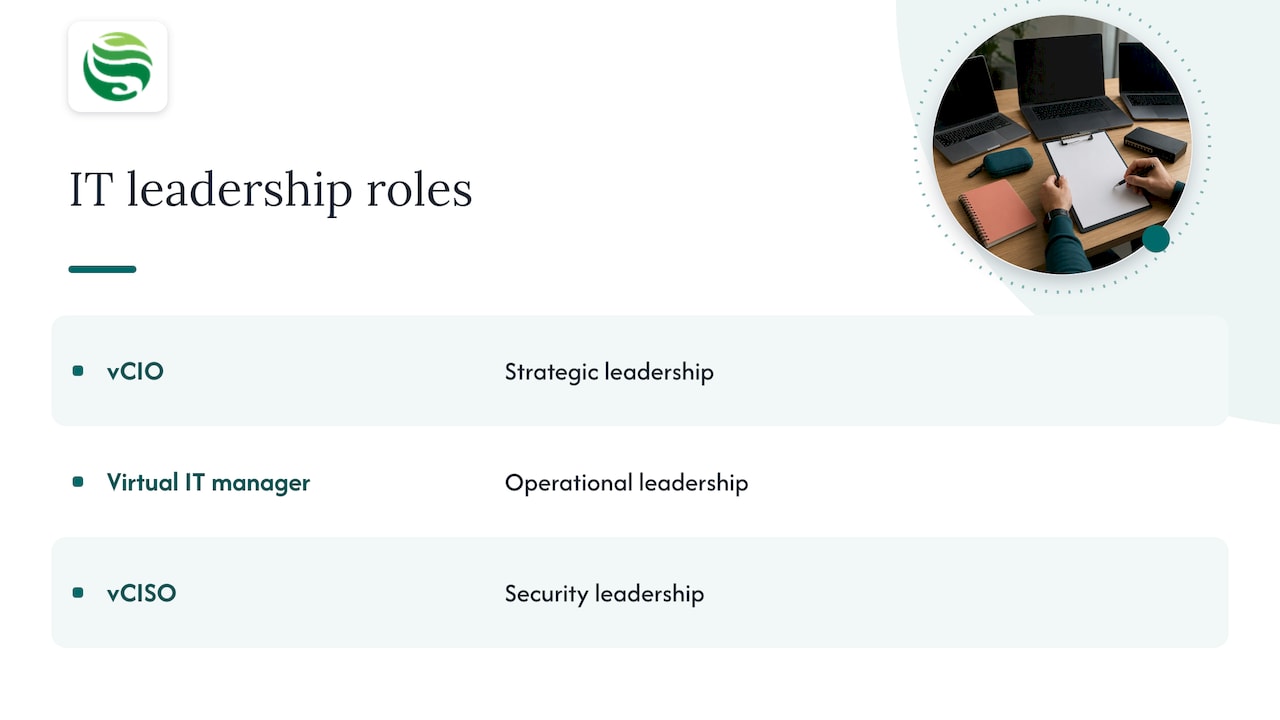
The same source notes that some providers layer strategic (vCIO), operational (virtual IT manager) and security (vCISO) leadership on top of outsourced day-to-day work. In practice, a virtual IT manager sits at the operational end. They own the questions that keep arriving on a director’s desk: who is responsible for this system, what is it costing us, is it secure, and what should we replace next year?
Virtual IT manager or routine IT support?
A help desk fixes things when they break. A virtual IT manager decides what should exist in the first place, and makes sure someone is accountable for it. Many businesses without an in-house team live in constant firefighting: each problem gets solved, but nobody owns the pattern behind them.
| Routine IT support | Virtual IT manager | Full-time IT manager | |
|---|---|---|---|
| Main job | Fix issues and requests | Plan, oversee, prioritise | Run IT day to day |
| Focus | Reactive | Proactive and strategic | Both |
| Commitment | Per ticket, hour or plan | Agreed retainer or hours | Employment contract |
| Best for | Simple, stable environments | Growing firms with no IT owner | Larger, complex estates |
The two are not rivals. The strongest set-up usually pairs a managed support service with a named person who directs it. That is how our own outsourced IT manager service is designed to work alongside support for businesses in Aberdeen and Aberdeenshire.
What a virtual IT manager typically does
Exact scope depends on the agreement, but the work usually falls into five areas.
- IT strategy and roadmap. Linking technology decisions to business goals. The NCSC’s board guidance says a cyber strategy that supports business strategy helps reduce risk, financial impact and reputational harm (NCSC Board Toolkit). A virtual IT manager turns that into a plan you can budget for.
- Risk assessment and review. The NCSC describes risk management as iterative, with regular reviews and fresh assessments after significant changes in threats, technology or system use (NCSC 10 Steps). Our guide to an IT risk assessment in eight steps shows what that looks like.
- Supplier and vendor coordination. One person who deals with your broadband, software and hardware suppliers, so your staff do not have to.
- Security and compliance direction. Access control, backups, policies and certification planning (more below).
- Reporting. Plain-English updates for directors, in a format that supports decisions rather than burying them in technical detail.
Keeping security and compliance on track
For a small business, the practical value of a virtual IT manager is often security ownership. The NCSC points UK organisations to its Cyber Action Toolkit and to Cyber Essentials, a government-backed scheme that protects against common cyber attacks (NCSC small and medium-sized organisations). Someone has to run that work, and a virtual IT manager can.
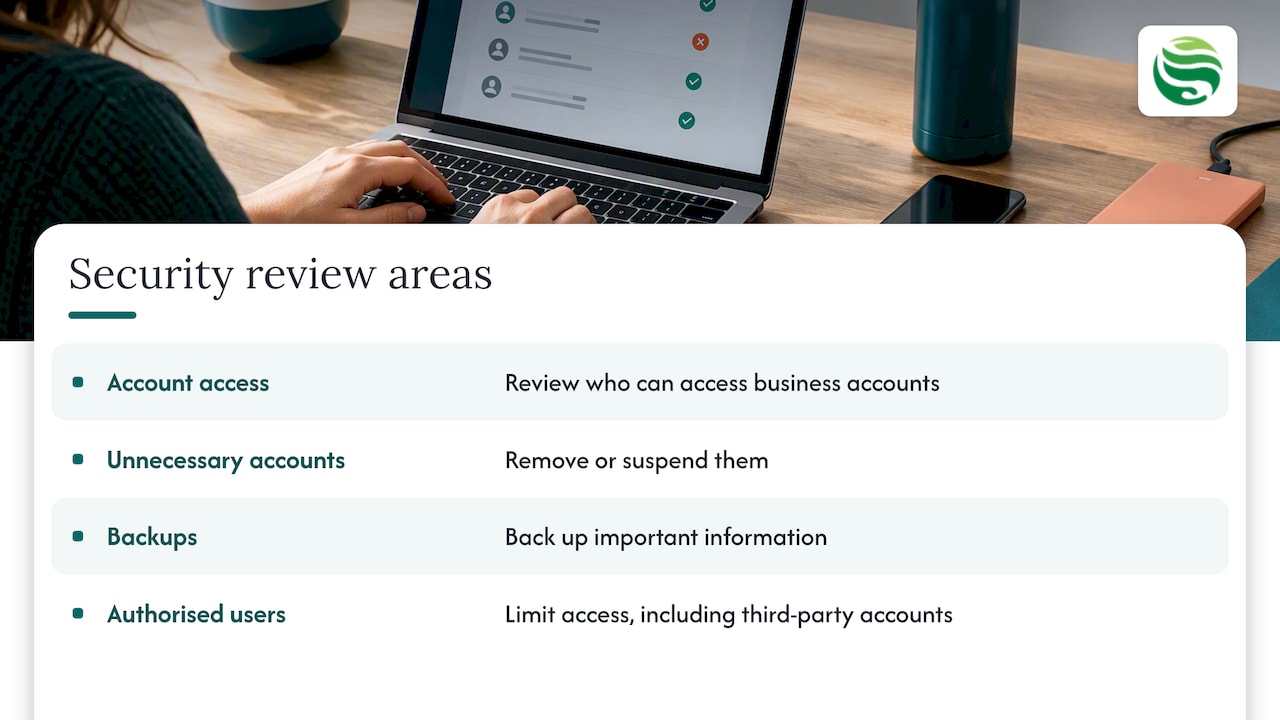
Business.gov.uk says an ongoing review should cover who can access business accounts, removal or suspension of unnecessary accounts, and backups of important information (Business.gov.uk). The current Cyber Essentials requirements also highly recommend an appropriate backup solution and limit access to authorised users, including third-party accounts (Cyber Essentials v3.3).
If you are weighing certification routes, read our comparison of Cyber Essentials and ISO 27001, and our SME password policy guide for a quick win.
When a virtual IT manager makes sense
The role fits best when three things are true: IT matters to how you trade, nobody in the business owns it, and a full-time hire would be more than you need. Typical triggers include:
- Your IT has grown by accident, and nobody can say what you own or who has access.
- A migration is coming, such as moving to the cloud. Our cloud migration checklist shows the stages someone needs to lead.
- Customers or insurers are asking about your security controls.
- The person “doing IT” is an office manager or director with another full-time job.
- You already pay for support but still have no plan, no budget forecast and no one accountable.
If your needs are simple and stable, ordinary support may be enough. Our guide on how to choose IT support helps you judge which side of that line you are on.
What affects the cost
We have not found a reliable UK price benchmark for virtual or fractional IT management, and we will not invent one. The cost is set by a handful of variables you can control:
- Time commitment. A few hours a month for oversight costs less than regular on-site presence.
- Scope. Strategy and reporting only, or hands-on project oversight and vendor management as well.
- Size and complexity. Number of users, sites, cloud services and regulated data.
- What sits underneath. If the same provider already supplies monitored support, the manager’s work is better informed and less duplicated.
- Contract shape. A retainer, a block of monthly hours or project-based work.
A full-time hire brings salary plus employer costs, holiday and sickness cover, and a single point of failure when that person leaves. A retained arrangement lets you scale involvement up or down. Abersecure does not publish fixed prices for its outsourced IT manager service, so ask for a scoped quotation based on your own environment.
How to choose a provider
The NCSC’s guidance on choosing a managed service provider is the best checklist available, and it applies equally to a virtual IT manager (NCSC MSP guidance). Ask about:
- Certifications. The NCSC suggests checking for recognised certifications such as Cyber Essentials Plus or ISO 27001.
- SME references. Evidence of working with businesses of your size.
- Clear responsibilities. What the provider owns and what stays with you, written into the contract.
- Incident reporting and liability. How fast you will be told about a problem, and who is liable.
- Access controls. Least privilege for the provider’s access, and two-step verification on their accounts.
- Service levels. Response and resolution times, including for out-of-hours issues.
The NCSC also stresses that a provider’s administrators should not share management accounts, and that every action should be traceable to an individual (NCSC guidance on MSPs). It is a good question to put to anyone you are considering.
Our outsourced IT management checklist sets out what to expect across the first 30, 60 and 90 days.
How Abersecure approaches it
Abersecure supports businesses in Aberdeen and Aberdeenshire with managed IT support, managed cyber security and an outsourced IT manager service, built on a Security by Default approach. That means security is part of how support is delivered, not an add-on bolted on afterwards. If you want one accountable lead for your technology, with monitored support behind them, see our Outsourced IT Manager service or compare our support packages.
FAQ
What does a virtual IT manager do?
They act as your IT lead without being an employee. That covers planning, reviewing risk, overseeing suppliers and projects, directing security and reporting to the directors. Day-to-day fixes usually come from a support service working to their direction.
Is a fractional IT manager the same thing?
In practice, yes. Both terms mean a part-time share of an experienced IT leader. Check the written scope, because providers use different labels for similar work.
Do I still need IT support if I have a virtual IT manager?
Usually, yes. A manager sets direction and holds suppliers to account, but someone still has to handle user requests, patching and monitoring. Many firms get both from one provider, which keeps responsibility clear.
Is a virtual IT manager worth it for a small business?
Often, when IT is important to the business but there is no one in charge of it. If your environment is small and simple, routine support may be enough. A short scoping conversation will show which you need.